
Flight Risk
Or, How to Hijack a Highly Sophisticated Machine in Five Seconds Flat

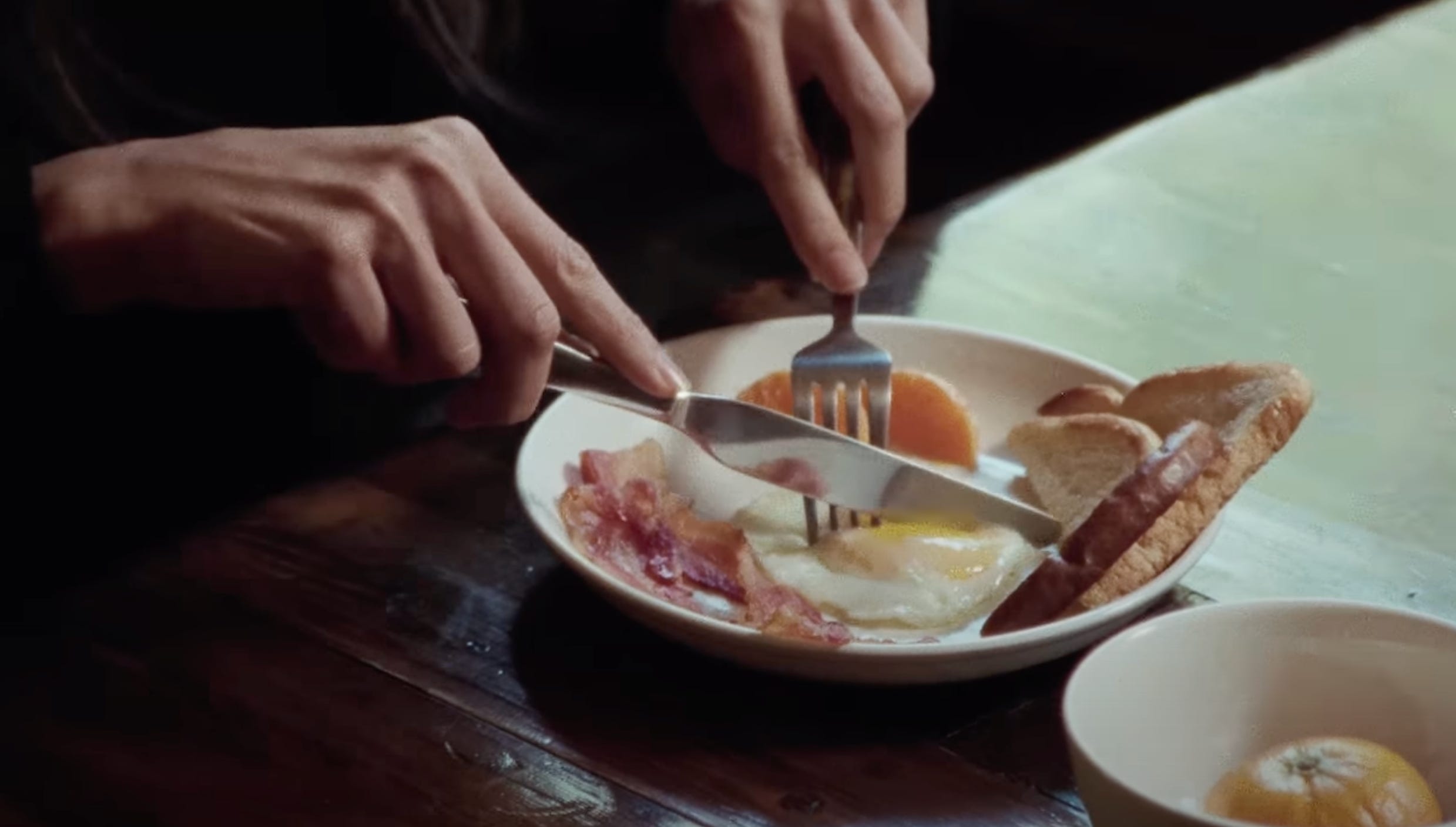
People are so cute. You’re out at dinner, and when you look across the room, there’s a group of friends commenting on how the dumplings are still too hot to eat, you’ll burn the roof of your mouth, one says, and you’ll think, aw, friends, so cute. You’ll wonder how they found each other, who said hi first, who invited whom. What are they trying to impress on each other? What are they eating, and why did they order that? You would never order that. So cute, people out on the town, blouses and blazers, performing. They smile at unexpected times and talk over each other, say c’mon don’t be such a baby, just blow on it first, there’s more food coming and not enough space. The tables here are way too small for the dishes. Who designed this? One of them talks way more than the others and another fights for attention, but meagerly so, hardly noticeable up close, and there’s one without makeup at the edge of it all, smiling pleasantly, happy to have been invited, who would’ve been FaceTiming her parents from her futon couch as a CSI marathon drones on just over the computer camera, a Good Girl, no trouble, had one of them not added her to the chat. You want to point out how cute they are to your boyfriend across the table who first pointed out to you how cute people are out to dinner, but his attention is fixed on a glowing black brick in his hand, and so your attention follows, naturally, to his thumb going flick, flick, flick, flick, flick.
Next to you, more people on phones. Across the room, silent partners space travel between Gaza, Botox parties and Restoration Hardware. There are plenty of diners here beyond the table of cute friends, but it’s hard to care about them. They resemble the species you’re designed to commune with, but they’re not cute. Somehow they barely seem to occupy their tables, they’re more peripheral, like sandbags, chair weights. It’s easy to tell whether any one of these people is perusing the QR-menu or scrolling: either their eyes are aglow with luscious paintings of wok-fried green beans bathed in chili oil, or they’re dead.
Not everyone is dead, at least not consistently, but each one of us will spend at least a matter of minutes or seconds (that add up to minutes, realistically hours) awash with narcosis. Soon enough, your boyfriend will come back and towel off the residual cortisol of what the scroll showed him as if nothing has been lost. Even you, in your daydreaming, stopped tasting the food. You forgot about the flesh of your thighs sticking to the leather chair. Luckily for you, the spice in your mouth and the feeling in your legs are not gone, they’re still there. But your capacity is limited. Your attention is finite. Simply remember and the feeling will come back.
It can be very hard to be present. For many, it’s scary, even dangerous. For most, it’s simply unnecessary, a little uncomfortable, and harder still to remember why it matters. Until you do.
I’m in a large, unfamiliar room right now, reading about Epictetus. He was a Stoic philosopher who lived between 50-135 AD and is credited with what is perhaps my favorite string of words, “You become what you give your attention to.” I consider what I could be giving my attention to: the humans around me, my butt, which is starting to ache, the world within my smartphone. I, like everyone, leave a lot. With more and more frequency and less and less intention. Everyone in the room with me is on a device or in a book with their device on their lap. With less and less work, we depart from reality and enter replicas of it.
I’m at the point where sustained, focused attention can feel painful, but I consider myself lucky. I’ve lived in a world without phones, without Internet. I don’t remember it well, but it must be in my development somewhere. I know to seek out quiet, I’ve felt the bliss of melting into meditation or an oil painting or eye contact, the feeling of a moment itself set ablaze when everything shows up and brings every tingling nerve of the solar system with it. I know how good it feels for attention to fall on me, how being listened to feels like love, and listening to others, generosity. So many distractions, but I engage with you. What a privilege it’s become.
How you attend to something matters a great deal. How you pay attention informs how you see, and how you are seen—detached, engaged, distracted—and thus has the power to alter whatever you meet. What you pay attention to becomes the world you recognize, building that which receives your attention, and destroying what doesn’t. How you attend to something matters a very great deal indeed.
The large, unfamiliar room I’m in has marble floors, windows along two adjoining walls and four sections of leather seating in straight rows facing a warm wooden rostrum shielded with plexiglass for four empty chairs. I wonder what kind of wood it is, think it sad I don’t know my woods better. I’m in a seat nearest the front window where an American flag whips itself against the building. A car honks in short bursts on the street behind me as a phone runs scales on an electronic marimba in the hallway and stops without a hello. I am idle enough I register the pang at the base of my skull, my chest tightening with each honk of the car horn, out of the way, and the cell phone ring, climbing and stopping and climbing deeper into my ear drum to give my brain a little tug, to action. But as soon as I sense the threat my brain races to orient itself: car, outside, phone, out there. And I am idle enough I then tell myself a story about the man stuck in traffic, his tie dangling over an espresso in his left hand, shouts hitting and sliding down the front windshield, and the mother in the hallway is setting up appointments perhaps, or dodging bill collectors. I am in a waiting room in a courthouse in Downtown Brooklyn in the early afternoon where all of these sounds belong. There is nothing to fear.
Here comes the young man with more names. He comes in every few minutes, this young man, a very young man, too young to do this job, it looks like, not a wrinkle on him, his hair and the way it curls saying I have no vitamin deficiencies, in sloppy grey trousers and lumpy grey zip-up, ill-fitting in the way boys wearing mens clothes can be, still waiting to fill it out, through a recessed set of swinging doors to read off a new group of names and lead more disheveled strangers out. Maybe he’ll say my name this time. I tilt my computer screen down to convey that I’m listening, and I am, listening, but there is my phone and there is my thumb and here’s a Deadline article for another movie I’m not in, an ad for rugs from a Chinese megafactory, a slideshow of otters cuddling, so cute, so silly, I have to forward it to my boyfriend. It’s our inside joke, animal memes depicting nauseatingly unhealthy but squeal-enducing attachment. I come to as the procession is leaving the room and can feel this cocktail of self-loathing, environmental doom and giddiness getting compressed under mounting panic as I scramble to replay the tape in my head, listening for my name. Did I miss it? Would it have woken me up?
My computer flashes as it receives a new email. To action. My phone sits blankly at my side telling me my boyfriend has yet to respond and may be dead. Illogical as it is, my body doesn’t know the difference. My body is tingling for connection. For news. It has come to expect it instantly, constantly. I have two devices with me today and several apps for accessing stimuli and even though I’m not actively engaging with either in a way that presents as problematic to me, I can’t reorient myself depending on use. On this wider, quieter screen where I reclaim my attention I play a continuous game of Whack-A-Mole where texts and emails and Malware notifications may pop up at any moment and beg to be processed, and under a layer of glass less than 3x6 inches wide, now toggled to sleep, my brain anticipates invitations to participate. Calls to action. Learn about the genocide, it beckons, learn about Spotify, about feline agility. Watch your favorite actor brought back to life, watch a woman being shot in the face.
To the person on the phone, the phone is everything, the phone is everywhere. It is injury and salve and it plays like an all-hours arcade with unlimited tokens and the easiest money you’ve ever made. But the witness to the person on the phone sees something else: a void, a suck, a soundproof wall. Molecules of the face skin and eyeballs of the person on the phone detach themselves to get closer to the screen, to live inside it, its light getting brighter as the eyes grow dim. Time and spacial planes diverge. Distance between person on phone and everyone else expands. To all but the person on the phone, the phone is a reaper of life. Even after we come back, the shape of the phone and what we saw and how it felt imprints on our lover across the table, the emotional debris of the journey holding parts of us hostage. That we can still come back makes it look innocent, we are so quick to forgive what it takes from us.
No one watched the orientation video this morning. It was boring, too obvious, too monotone, bad acting. Non-union, probably. With the exception of one girl who was trying to sleep, everyone in the room was distracted. There was a guy I dated a few years ago who said he couldn’t focus unless he was doing something else, that he needed to be doing something that was not the thing to be focused on in order to focus on it, and I thought that could apply to some of us here, but surely not everyone, and ultimately I don’t even think it’s relevant. Never mind the video. No one chose to be summoned for jury duty today, no one cares about the video. Fine. But there are windows to look out at the sky, still brightening, hotel windows to peek into. The strangest assortment of reading materials at the front of the room. Front and center, there’s a thick brass emblem that evokes Medieval Times and reveals its quirks gradually, twenty seconds in, the woman is blindfolded, forty, there’s a crown under her foot, a minute and a half in, the sun at the point of a rigid peak has a smiley face on it?! How with so little definition do the women have such soft paunches, and what painstaking artist chiseled them into being?? We are so many cute people in a room dressed up for jury duty, and when it’s all over, we will have been here only a few minutes. The rest of the time will have been spent pretending we’re somewhere else.
It is so easy to leave. So much communication happens digitally that even in the real world with real people we’re accustomed to letting our attention drift, and more brazen in our displays of distractedness. A woman on her phone walks into another woman on her phone wakes up on the wrong street. It’s a wonder when a car moves as the light turns green, there is so much to be distracted by. And there is a re-entry period. The deeper we slip into the infinitude of sounds and images, life and death, each carrying their own call to care and cry and laugh and scream, the more work we must do to crawl out of our emotional incoherence and overwhelm and repatch our neural circuitry. For anyone who read my last post about eco work, the girl whose face went slack as I was hunting down a burrito was apparently overcome with something called the Gen Z stare, a term my friend introduced me to, which I could have defined myself with some effort but instead Googled because I rarely rely on my own faculties anymore, only to be fed an AI overview: an expressionless look young people (Gen Z) often give when spoken to, appearing vacant or unresponsive in customer service or social interactions, sometimes seen as a defense against absurdity, a form of quiet protest, or a result of pandemic-induced social skill changes. As I experienced it, the girl’s CPU powered down.
I wonder how much of our attention we have to give away before we lose access to it. Whether we will lose access to it isn’t really a question for me anymore, I saw the girl, I can read a chart, from the dawn of human civilization through the Industrial Revolution to the advent of television and The Internet and cell phones and ChatGBT and the room of cute people going flick, flick, flick our distractibility is an impossible upward curve with no perceptible grade anymore, just a piercing vertiginous line that will collapse in on itself before it ever bends. Our ability to feel, too, to experience complex human emotions in real time in the real world seems to be faltering. For as long as we’ve been around, we’ve been time and space traveling (language itself is a means of travel, conveying past and future and Heaven and Hell as long as you can pronounce it), but as the fantasy grows more materially solid and delicious and available and the reality boring and strenuous and out of our control (at least in comparison; at least without a little practice), the whiplash of traveling back and forth will only get worse. Not that we control our digital intake. The algorithm is very good at making us feel like we’re driving, but we are pigs at their trough. Hungry, hungry piggies slurping up self-perpetuating slop.
It was almost cute at the beginning. The Internet was so innocent in its limitations you could come up against a wall of it, and our intimidation, our tentative exploration of it was communal, we were like explorers in the arctic traveling a few miles at a time. And dial-up made us so intentional. You had to jam up the phone line and then listen to a seizure of frequencies and wait ten minutes for a photo to reveal itself ten pixels at a time. It was simply too annoying to look up something that didn’t matter to you, and what you saw became a landmark, an event. Those early URLs live in my memory with full dimensionality, Homestar and Salad Fingers carry a where and when and with whom, they are sticky with emotional residue. Just as I wouldn’t have gone out with that guy who had to be on his phone to listen to me talk if dating were any more difficult than swiping and showing up—it’s much harder to be intentional now, and so little is sacred. “If you yourself don’t choose what thoughts and images you expose yourself to,” so said Epictetus, “someone else will.” We lean into what’s easy, and what’s easy is being fed. It’s easier to order food off of a menu than to choose a recipe, source ingredients and cook. It’s even easier to open an app and tap a screen and have the food show up at your door like some kind of magic trick. One day, if we’re really lucky, we won’t even have to tap anymore. We won’t even have to think. It’s so hard to be an active participant in your own life, so much easier to be a pig at a trough.
No one “wants” that though. No one wants to be a pig. We want to be hot, productive, free-thinking humans who contribute to our communities and show up for the people we care about. We want to remember our friends’ favorite cake flavors and the epic quote from that epic movie, we want to walk through the world guided by our own opinions backed up by research, our own morals and ethics supported by experience. But our worldwide web-based brains are less equipped to do that now. Even when we generate, even when we take a break from feeding to create something, I don’t care what it is, a poem, a Substack post, an acoustic performance in your bedroom, you will get likes, and those likes will be attached to people you may know, but you will not get feedback, you will not see facial twitches or redness forming in the corner of an eye, there is no nuance, no dance of mirror neurons, no metaphysical exchange. And the brain is adaptive. The brain can learn that double-tapping can suffice as human interaction. That it can learn things retroactively by looking it up later. The brain can orient itself to believe that any horror, no matter its physical proximity, is a safe distance away and transitory, that we can visit our friends without leaving the house. See something you don’t like, power down. Even in real time, in the real world with real people, the online brain is conditioned to believe that it needn’t pay such close attention. The online brain is so overwhelmed that it can’t.
It’s so easy. My phone doesn’t ask a thing of me, not a thing, but my time, my presence, my ability to recall information, friends’ names and addresses, Mom’s birthday, the route home, control over my entire nervous system, the will to generate my own entertainment or creativity or happiness, any sense of grounding or need to know where I am, how I got here and how many sunrises I have left. It does it all for me. It saves me so much time, and all that time is mine, mine, mine.
At 4:30pm, a Skype signal echoes through the room where about fifty of us remain. I hear a woman two rows behind me let out a small laugh, but I don’t look, I think some jerk on his ThinkPad is setting up a work call and don’t want to give him the satisfaction. But then another little laugh escapes from another corner of the room and I can’t help but look, I am curious, I have been curious this whole day about who the fuck these people are who live in my borough and don’t want to talk to me, and I see the woman who laughed first laughing a little louder now, emboldened by the response to her call, and she is looking so cute to me now. I may be projecting, but it sounds like probing laughter, a shy invitation to play after we’ve passed a silent day in each other’s estranged company. The commissioner of jurors comes on and, no, I can’t remember what she says, I never have and likely never will have the ability to commit quotes to memory, but I do recall sunshine, I recall melodic sing-song cadence and a generous, energetic awareness of her audience, and I am surprised when I’m sad to be let go. I don’t know until the decision is made for me that I want to serve, that in fact what I want more than anything these days is to be one in a room full of people with a vested interest in being precisely where we are. I want to endure long days of listening, and of close paying attention. I want this bubbly Nancy Pelosi lady with Diane Keaton affectations to see my face stretching into a smile, my gift back to her, but the screen only goes one way, so I leave it with the young man in misshapen clothes instead. Enjoy your freedom, he says as his eyes flick to the next person in line, see you in eight years.
This reminded me so much of what Jared Henderson is talking about over on his philosophy substack right now. I think you would like his stuff!